It's Friday and it was blowing hot and cold, a light north breeze and some cloud made it cool but when the cloud broke the sun was warm. And when the sun came out the boardwalk was just heaving with lizards. I walked around and counted 70 small lizards born this year and 11 big ones that were at least 2-3 years old. A recent visitor said that her son loved them as he thought of them as his very own dinosaurs. They were so tame that they just sat there as I walked past slowly and quietly while watching me with their beady black eyes. There was one big brightly coloured one that I decided to photograph and as I edged closer and closer it decided to check out my camera by leaning forward and running its forked tongue over it, hence the blurred blob. For a full on close up wildlife experience when you are visiting look out for them and see if you can get as close but do it soon before the weather cools and they head for hibernation.
Tuesday, 17 August 2010
Those Lizards
It's Friday and it was blowing hot and cold, a light north breeze and some cloud made it cool but when the cloud broke the sun was warm. And when the sun came out the boardwalk was just heaving with lizards. I walked around and counted 70 small lizards born this year and 11 big ones that were at least 2-3 years old. A recent visitor said that her son loved them as he thought of them as his very own dinosaurs. They were so tame that they just sat there as I walked past slowly and quietly while watching me with their beady black eyes. There was one big brightly coloured one that I decided to photograph and as I edged closer and closer it decided to check out my camera by leaning forward and running its forked tongue over it, hence the blurred blob. For a full on close up wildlife experience when you are visiting look out for them and see if you can get as close but do it soon before the weather cools and they head for hibernation.
Sunday, 15 August 2010
Look Up
I was chatting in the car park to a chap who was making his first visit to Flanders when he suddenly said "what's that ?" and above me appeared an osprey flying low over the us heading south circling slowly. Very exciting, grabbed my camera and took a few poor shots. Ospreys breed in the area, drawn especially to all the lovely big trout stocked in the Lake of Menteith. The young have lefts the nests and hanging around the area before the plucky up courage and give into instinct and head south the spend the winter in the west of Africa. So now is as good a time to see them in the area. Look up and you might be lucky. This was the chaps first osprey he had seen as well so a good day all round !
Thursday, 12 August 2010
One moth's poison is another's food.
On a warm summers day parts of the Moss smell fantastic at the moment. With the heat of the sun the smell of the bog myrtle fills the air and what a fantastic smell it is.
It is a smell that captures the whole feel of Flanders Moss in summer for me but it is hard to describe it, resinous, warm, pleasant and then I run out of words but you will know it when you smell it. Tradition says that bog myrtle has insect repellent properties and some companies are making products which are meant to keep midges at bay out of an extract from the plant. However as I have been walking out on the Moss on midge filled days I have seen clouds of them come up from bog myrtle bushes that I have walked through so I am not sure how effective it can be. The smell is all part of the chemical warfare conducted between plants and insects. Plants producing chemicals that make the plant less edible so stopping it getting completely munched. However there are always ways of overcoming this form of defence and 3 of our special moths all live on the abundant bog myrtle on Flanders. The Rannoch brindled beauty, the great brocade and the argent and sable are all nationally scarce moths (that means that they have only been recorded in less than 100 10km squares in the UK) that use the bog myrtle on Flanders for their life-cycle. Mostly their caterpillars have worked out a way of overcoming the plants chemical defences and feed on the leaves for example the argent and sable caterpillar sticks the leaves at the end of branches together into a sort of tent inside which they can chew the inside of the leaves while hidden from predators.
Purely from a peatland habitat point of view the bog myrtle usually grows on parts of the bog that have been damaged by ditching or the surfaced disturbed. So as is often the case what is important for some special animals represents damaged to another even more special habitat. But the bog myrtle is there to stay now and there is not much we can do about it so I will continue to enjoy the heady aroma and also the beautiful inhabitants that live on it. I may even try the old shepherds trick of trying to keep the midges at bay by putting a piece of bog myrtle behind each ear. Then you'll know me when you see me.
Wednesday, 4 August 2010
Big ones and little ones
Aren't lizards brilliant ! Before the boardwalk was put in at Flanders I used to see lizards regularly on the moss but only in glimpses. Now you can get a right good look just from a short stroll along the path. The other day I went round on an overcast day and the lizards were obviously needing to get out to warm up as I counted 46 individuals along the way. Of these only 2 were fully grown adults, the other 44 were all very small, nearly black young beasts that would have been born this year.
And the being born bit is a big surprise because most reptiles lay eggs. But our lizards the common lizard Zootoca vivipara is specially adapted to live more northerly than any other species of reptile, one of those adaptations is to give birth to between 3 and 11 live young. once hatched these quick settle in to catching small insects and start to grow. Males mature in 2 years while females take three. Our Flanders lizards have another 6 to 8 weeks to feed up before, depending on the weather, going into hibernation when it turns cold. On the Moss they can't hibernate to deep into the ground because of the high water table so they probably spend the winter in rotting piles of brash and the large hummocks ready to come out win April when spring warms up. They made be small but they are real wildlife that just about everyone can see if they are quiet and slow moving and in the right weather.
Monday, 2 August 2010
How much from above ?
Those regular followers who like me are becoming obsessed with amounts of rainfall then they will be pleased to know that things have improved a bit this last month. 119mm of rain for July is above the rough monthly average for Flanders (about 100mm a month) but is actually represents a dryish July, Scotland summers being on the wet side. The Moss has been looking a lot wetter but the sponge that is the body of peat that makes up Flanders still needs more topping up. After only a week of little rain it is starting to look dry again. So August here we come.
Anyone walking around the boardwalk will notice the difference between now and just a few weeks back. It is quiet. The bird song has dropped off completely as males no longer hold territory but hide away with the females moulting and trying to replenish their fat reserves before going on migration. It is a sad fact that April / May seems a long way away when we will next be hearing that cacophony of birdsong that so lifts the spirits.
Friday, 30 July 2010
Lookering on the bog
As you can see, we have sheep on the Moss. This rather motley crew are part of the Scottish Wildlife Trust flying flock, a group of sheep that are not quite as exciting as their name but they are moved around to undertaken habitat maintenance at a number of conservation sites. So for July till September we are hosting 40 different coloured sheep whose job is to nibble as much birch trees as possible hopefully killing them (the birch not the sheep).
We know from old documents that sheep grazed Flanders Moss for hundreds of years up until the early 1800s. This combined with burning of heather probably kept Flanders free of trees for much of its life. The trees only invaded when grazing and burning no longer happened on the Moss. So what we are doing is bringing back a traditional form of management. However unfortunately we can't just replicate the old management just how it used to be. For a start young children used to herd the sheep out onto the Moss and then keep an eye of them for the day and then bring them back to the farms in the evening. Welfare issues rule out this management option these days unfortunately (though my daughter would happily do this for pocket money and to get out of chores and school). Also the sheep of today are mostly not up to grazing anywhere as tough as the Moss. So what we have to do now is to get in special sheep breeds that can withstand the hard grazing and wet conditions. The flying flock are mainly Shetland sheep who think Flanders is a breeze compared to where they come from. The sheep have to be fenced onto the Moss as if unattended they would naturally head for the better grazing in the arable fields surrounding the moss, something our neighbours wouldn't approve. For animal welfare reasons we also need to check the sheep 4 or 5 times a week to make sure they fit and healthy and all present. In the old days this activity was called "lookering", a good name for sheep checking. You would think counting 40 sheep was an easy job but this activity is hard work as these sheep don't like making things easier for the counter. Firstly they hide in the grass. When finally discovered they then mill around, hiding behind each other and generally make it difficult to be counted. And then they burst off across the Moss and try to sneak back to be double counted. But despite this there are signs that the sheep are starting to do their job and all the time the do theirs I am happy to "looker".
Monday, 26 July 2010
Moth Magic 3
Well we have been at it again. In our attempts to track down the rare moths of Flanders the resident moth expert Prof John Knowler and I ran a moth trap out on the Moss last Thurs night. There are a small number of rare and declining moths that haven't been recorded on the Moss that should be out there and their flight periods are all around the July August period. So this means a late evening trek out to the Moss to set a trap running through the night and an early morning trek back to see what has been caught. The evening chosen was fine though maybe a little cold (about 12 C ) so we weren't sure what was going to be there in the morning, moths liking warm, muggy and dampish nights best.
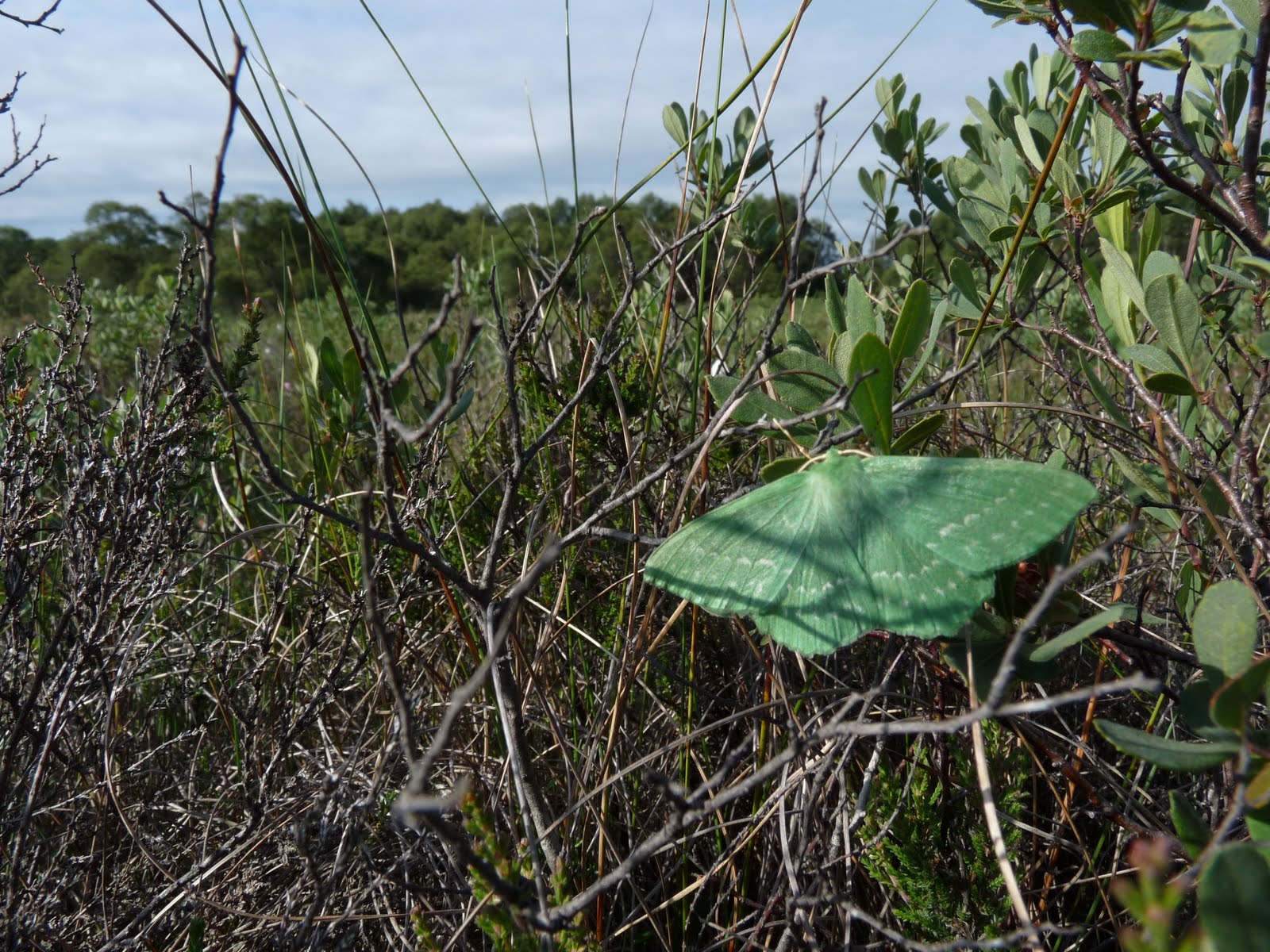
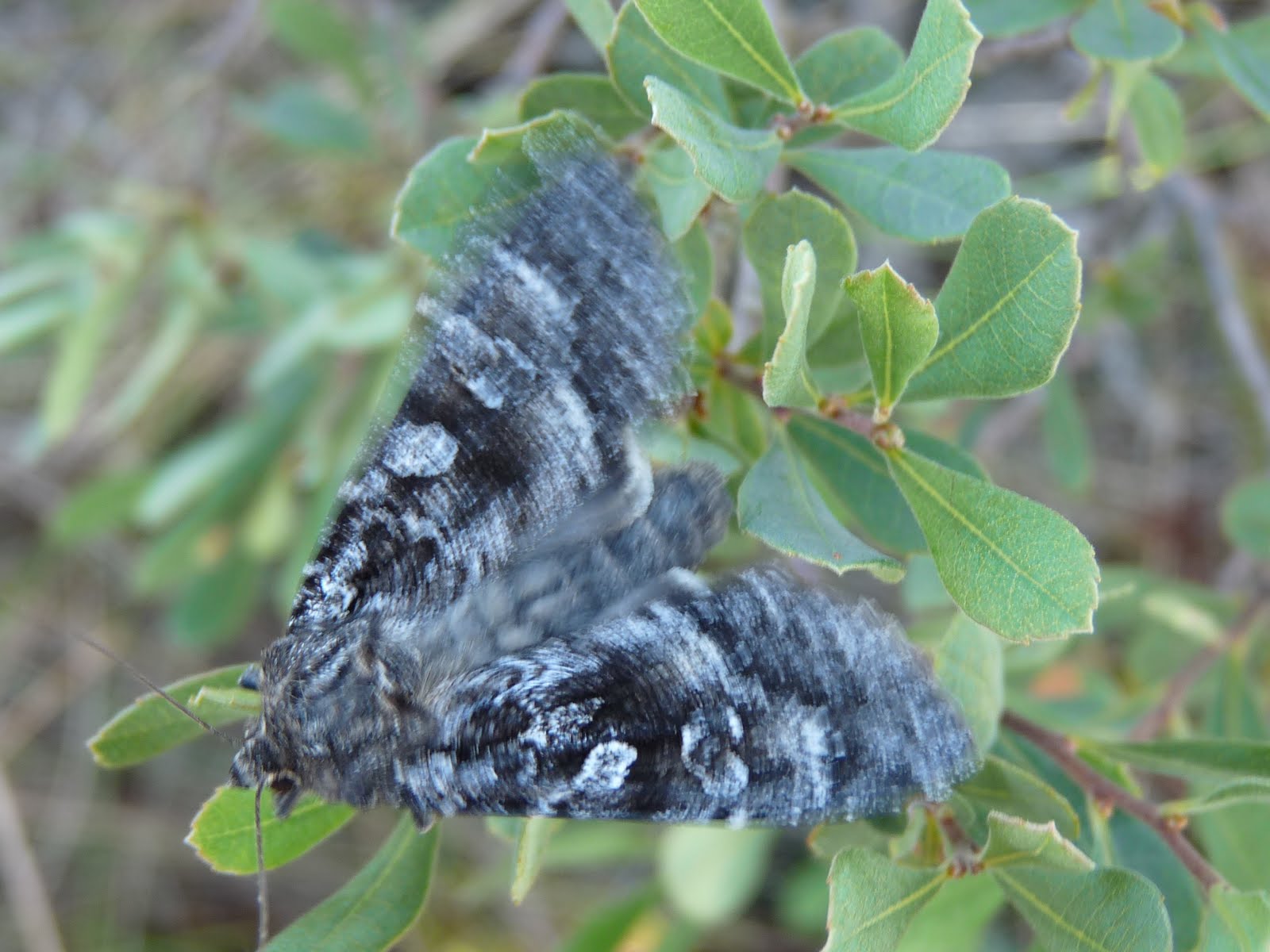
In the morning 223 moths processed, identified, photographed and released later we knew we had a pretty good catch. Some of the highlights included 40 drinker moths (a rather odd looking, golden coloured moth), 19 true lovers knots, 14 smokey wainscots and 15 ingrailed clays. Don't moths have such cool names? A few more with good names that we caught included 1 oblique striped snout, 1 lesser swallow prominent, 2 green carpets and 4 map-winged swifts. We also had 12 Manchester treble bars, a nationally scarce Flanders Moss speciality, the correctly named large emerald and as its name suggests a very dull looking plain wave that is actually locally very scarce. But the absolutely highlight was 5 beautifully fresh, newly hatched, great brocades. This is a nationally scarce moth that sometimes migrates over from Europe but a small number actually breed in the UK. At Flanders we thought we had found the caterpillars before but this was definite proof that the moths breed on the nature reserve. There hadn't been many more than 5 records for the whole of central Scotland before so to catch 5 individuals in 1 trap was something special.
I also set a small trap over the other side of the Moss which I checked afterwards. This one has a weaker bulb so attracts fewer moths but still managed 32 moths of 11 species of which 2 we hadn't caught in the big trap, the subtlety beautiful iron prominent and the way over the top garden tiger. All in all not a bad haul and a bit more of the jigsaw puzzle of the moth world of Flanders Moss pieced together.
Subscribe to:
Posts (Atom)